
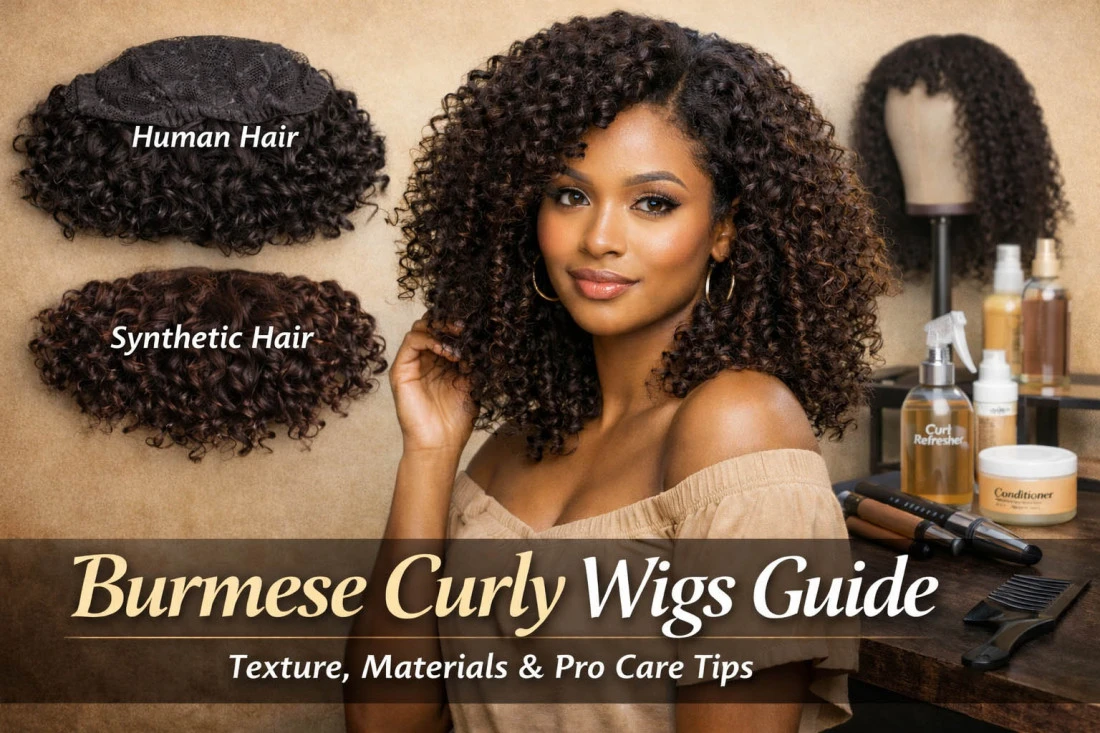
Burmese Curly has emerged as a defining textured option for crochet installs, wigs, and protective styles in 2026. Its layered, multi-diameter curl structure produces a natural, volumized silhouette that performs well on camera and in everyday wear. This article delivers a formal, publication-ready analysis of the Burmese Curly texture: its structural characteristics, concise material classification, objective advantages and limitations, recommended user profiles, and precise maintenance and installation protocols. The intent is to provide professionals, retailers, and informed consumers with authoritative guidance for selection, styling, and long-term care.
Defining characteristics of Burmese Curly
Burmese Curly occupies an intermediate position between loose waved textures and tighter spirals. Its signature features include:
Heterogeneous curl diameters: Within a single bundle or wig, strand diameters vary from broad, S-shaped waves to smaller, springy loops. This intra-bundle variability generates naturalistic depth and movement.
Layered density appearance: Interlocking curls create the perception of density without requiring excessive weight or additional volume.
Three-dimensional resilience: The elasticity inherent to the curl pattern permits compression and recovery, producing dynamic movement and reducing the appearance of static formality.
Surface texture that conceals construction: Subtle surface irregularities assist in masking crochet knots, wefts, and base construction, a characteristic that enhances the suitability of Burmese Curly for crochet applications.
These structural attributes make Burmese Curly particularly effective for users seeking naturalism, photogenic motion, and a textured finish that uniform curls cannot replicate.
Material classifications and objective comparisons
Material choice fundamentally determines appearance, styling flexibility, and longevity. In practice the market divides into three functional categories:
Basic synthetic fiber: Cost-effective with strong factory-set curl memory and minimal initial styling required. Visible synthetic sheen, low heat tolerance, and greater susceptibility to humidity-induced frizz limit its suitability to short-term use or budget-conscious applications.
High-heat resistant synthetic fiber: Engineered to accept moderate thermal restyling and to present a reduced gloss relative to basic synthetics. It offers an intermediate balance of restyleability and affordable durability, but still degrades under excessive heat or prolonged aggressive manipulation.
Premium human-like synthetic fiber and authentic human hair: Premium human-like synthetics approximate the hand and drape of human hair while remaining maintenance-simpler than basic synthetics; authentic human hair provides full heat styling, coloring, and the longest service life when cared for properly. For professional results and extended wear, human hair remains the superior option.
Notably, the brand Fysin Hair produces authentic human-hair Burmese Curly wigs that combine the texture’s aesthetic advantages with the functional benefits of real-hair materials.
Advantages and limitations
Advantages
Natural aesthetic: The multi-diameter curl pattern creates a lived-in appearance, reducing the necessity for daily restyling.
Lightweight fullness: The texture generates visible density without excessive mass, improving comfort and wearability.
Concealment of construction: The surface texture and layered curl formation minimize visible installation details, which is advantageous for crochet and wig applications.
Suitability for protective styling: Burmese Curly adapts effectively to protective techniques while maintaining an expressive, feminine silhouette.
Limitations
Propensity to frizz: Without appropriate maintenance, the texture may develop linting, fuzz, and surface matting, particularly at high-friction contact points such as the nape.
Maintenance requirements: Preservation of definition and appearance requires deliberate detangling, appropriate cleansing agents, and periodic re-setting.
Installation sensitivity: Excessive density or inappropriate length selection can produce disproportionate silhouettes that obscure facial proportions.
These limitations do not preclude adoption; rather, they delineate the required investments in technique, product selection, and routine to optimize performance.
User profiles: suitability and contraindications
Burmese Curly is recommended for:
Individuals who prefer a natural textured appearance with moderate maintenance investment.
Content creators, stylists, and professionals requiring dynamic movement and camera readiness.
Wearers seeking protective styles that retain volume and feminine movement.
Burmese Curly is less suitable for:
Individuals requiring slick, highly structured, or straight finishes.
Consumers unwilling to implement a basic maintenance regimen.
Situations requiring extended, zero-maintenance wear without periodic care.
Care and maintenance protocols
A systematic care strategy preserves curl memory, reduces frizz, and extends the useful life of the product. The regimen below differentiates daily, weekly, and periodic interventions.
Daily maintenance
Volume restoration: Employ finger-separation techniques to revive shape; routine brushing of dry curls is not recommended.
Hydration and detangling: Apply a water-based leave-in detangler or a light curl-reviving mist to maintain pliability and minimize static accumulation.
Protective sleep practices: Use a satin bonnet or satin pillowcase and employ a loose top gather to prevent compression.
Weekly maintenance (or after substantial wear)
Controlled detangling: Detangle from the tips upward using fingers or a wide-tooth tool specifically designed for wigs or textured fibers.
Cleansing: Submerge in cool water, apply a sulfate-free wig shampoo with gentle application, rinse thoroughly, and follow with a lightweight conditioner. Avoid heavy oil-based formulations on synthetic materials.
Drying and shaping: Remove excess moisture by gentle squeezing; reshape curls manually and air dry on a flat surface. For heat-tolerant fibers and human hair, low-heat diffusing may be used with caution.
Monthly or periodic maintenance
Deep conditioning: For human hair items, perform a restorative soak or mask treatment. For synthetic fibers, apply manufacturer-recommended revitalizing products.
Curl re-setting: For heat-safe fibers, re-establish curl pattern with perm rods and controlled steaming. For non-heat synthetics, employ damp re-rolling and air-dry techniques.
Installation and styling guidance
Density and length selection: For a balanced silhouette, prioritize moderate density (approximately 150–180 percent) and mid-range lengths (10–16 inches). These parameters preserve layered depth without creating excessive mass.
Weft and shedding control: Seal wefts on extensions to reduce shedding and maintain structural integrity.
Edge management: Utilize lightweight styling products for edges; avoid heavy gels and pomades that attract lint and flatten texture.
Blending considerations: When combining different materials, match curl diameter and movement rather than color alone to achieve cohesive results.
Tools and product checklist
Wide-tooth comb or loop brush designed for textured fibers
Spray bottle for water-based detangler or leave-in
Sulfate-free wig shampoo and lightweight conditioner
Leave-in curl refresher or lightweight mousse
Satin bonnet or satin pillowcase
Perm rods and steaming equipment for heat-safe re-setting
Low-heat diffuser (fiber-dependent)
Troubleshooting common conditions
Excessive frizz: Implement gentle detangling and apply anti-frizz leave-ins; remove extreme surface fuzz via targeted dusting or trimming when necessary.
Flattened roots: Restore lift with light teasing and texturizing powder formulated for wigs.
Matting at the nape or edges: Increase frequency of gentle detangling and reduce friction during wear by employing protective scarves or specialized collars.
Loss of curl definition: Re-set curls with heat (where fiber allows) or apply damp re-rolling and allow thorough air drying to re-establish pattern.
Purchase criteria and vendor assessment
When selecting Burmese Curly products, prioritize the following factors:
Material transparency: Confirm whether the product is authentic human hair, high-heat synthetic, or basic synthetic and select according to intended use and budget.
Visual documentation: Prefer vendors that provide multiple, high-quality images and video of unstaged, worn pieces to assess movement and density in real conditions.
Return policy and quality assurance: Verify return options, warranties, and the clarity of material descriptions to minimize procurement risk.
Density and length specification: Ensure the vendor specifies density percentages and accurate length measurements to avoid disproportionate outcomes.
Conclusion
Burmese Curly represents a technically sophisticated and aesthetically compelling texture for crochet hair, wigs, and protective styles. When selected and maintained according to the protocols described above, it provides a natural, photogenic, and wearable option that satisfies both professional and consumer standards. For practitioners and consumers seeking long-term, authentic performance, human-hair Burmese Curly wigs deliver the greatest flexibility and longevity when paired with a consistent care regimen.



Validate your login